Top 3 Madeai.com Alternatives for Literature Review 2026
Top 3 Madeai.com Alternatives for Literature Review 2026

Managing systematic literature reviews across fragmented tools wastes time and leads to inconsistent extraction. Most alternatives force manual file transfers or lack integrated workflows from screening to export. This comparison lays out three automation platforms so research teams can choose a fit without trial migrations.
Table of Contents
PaperSynapse
At a Glance
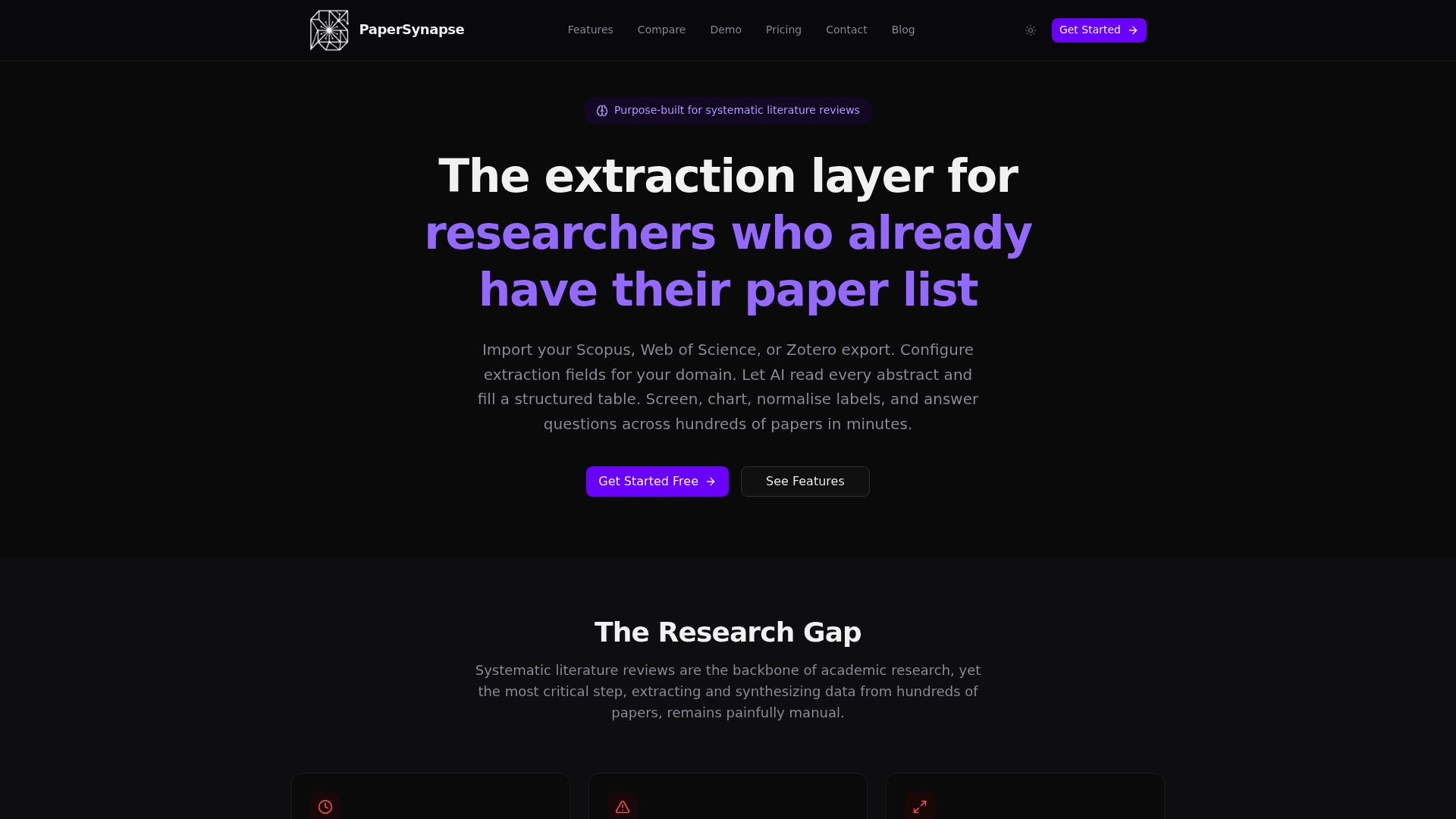
According to the company, PaperSynapse can process up to 200 papers in under two minutes. The platform applies AI to read abstracts and populate structured tables. It brings import, extraction, screening, normalization, and visualization into a single review workflow.
Core Features
PaperSynapse performs AI powered abstract reading and fills configurable extraction fields that match your domain. It normalizes labels across datasets and supports a PRISMA screening workflow so teams can record inclusion decisions consistently. The tool offers inline editing of AI generated data, custom tables and charts, CSV export, and RIS import from reference managers.
Key Differentiator
An end to end workflow keeps every review step inside one system from import to exported CSV and visuals. Combining configurable extraction fields with label normalization and PRISMA screening reduces handoffs between tools. That single workflow is the principal feature that separates PaperSynapse from fragmented toolchains.
Pros
PaperSynapse centralizes tasks you currently run across several tools, so you spend less time moving files between apps. Configurable extraction fields let you capture domain specific variables without custom scripts, and label normalization enforces consistent categories across reviewers. The platform supports import from common sources and reference managers such as Scopus and Web of Science, which speeds setup for large projects. That claim about fast batch processing suggests meaningful time savings for teams working on hundreds of papers.
Cons
- No direct PDF upload or reading. The product relies on reference list files for imports.
Notable Integrations
PaperSynapse supports CSV import and export and accepts RIS files from reference managers for direct import.
Who It’s For
Researchers running systematic literature reviews who must extract structured metadata from large article sets. PhD students and research teams that need domain specific extraction templates and consistent labeling will benefit. Meta analysts who prepare data for synthesis will find the PRISMA workflow and export options useful.
Unique Value Proposition
Configurable extraction fields plus label normalization that output ready CSVs and charts inside the same workflow. This reduces the manual recoding and table assembly that normally follow extraction. For teams with many papers, that claim about processing speed shortens the time from literature gathering to analysis.
Real World Use Case
A university team imports hundreds of records from Web of Science as RIS files, sets extraction fields for intervention type and outcome measures, and runs the AI reader to prefill entries. Reviewers screen with the PRISMA workflow, normalize labels across entries, and build focused charts for grant reporting. The group exports a clean CSV for statistical synthesis.
Pricing
A free tier is available with a 50 papers per month limit. Paid tiers include Pro at £10/month and Ultra at £25/month.
Website: https://papersynapse.com
Elicit
At a Glance
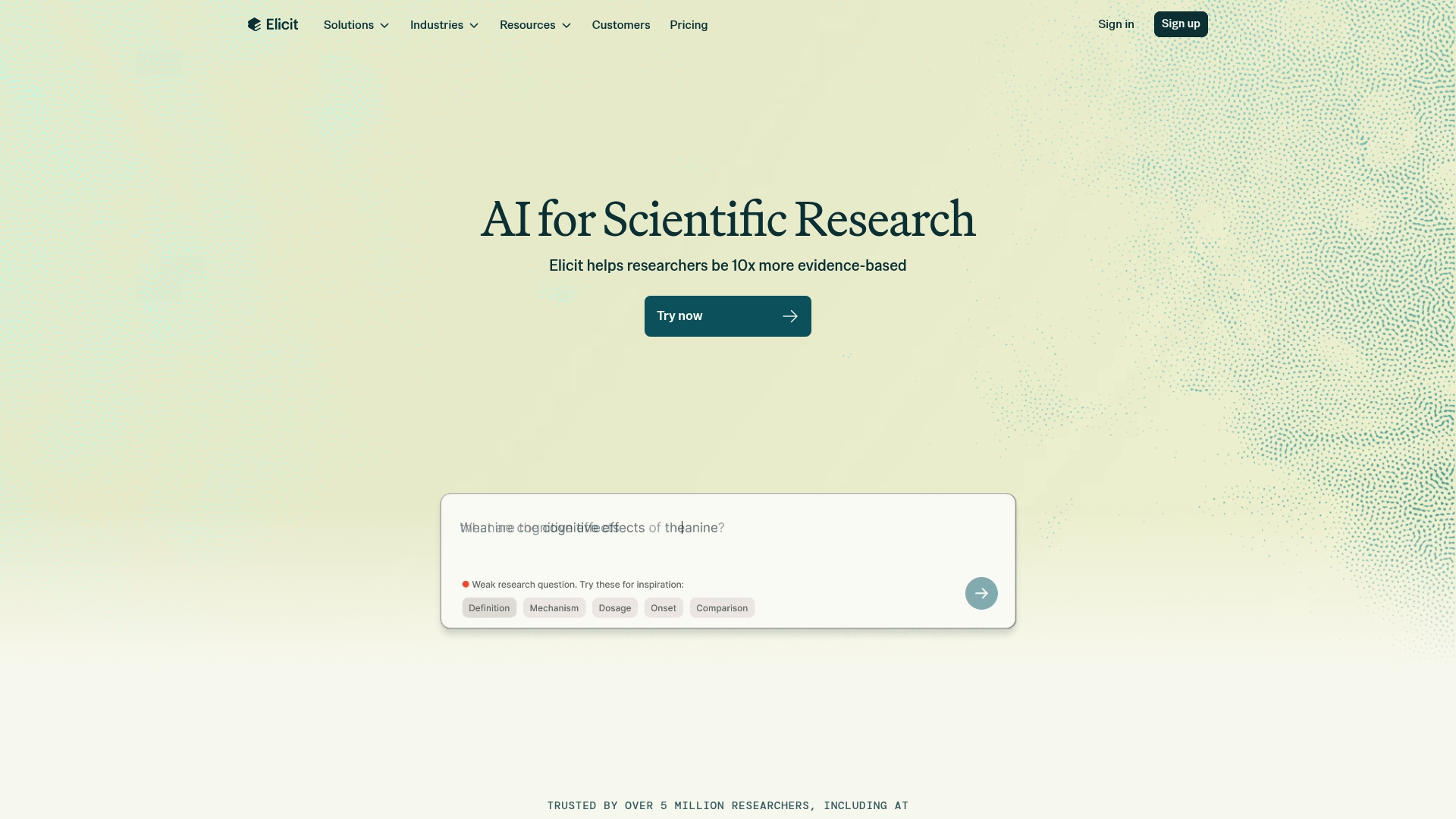
Elicit reports semantic search over 138 million academic papers and 545,000 clinical trials. Its index pairs with tools for citation-backed reports and an evidence review workflow. The product targets teams working on large-scale literature synthesis across pharma, academia, and medtech.
Core Features
Elicit combines a large-scale semantic index with customizable report templates that include sentence-level citations and data extraction fields. The tool automates parts of systematic literature reviews while providing a project library to organize and reuse sources. Alerts keep projects current by notifying you when new papers match saved queries.
Key Differentiator
Elicit stands out for pairing high-scale retrieval with transparent, audit-ready reporting that shows citations at the sentence level. That emphasis on traceable output supports reproducible evidence synthesis workflows. Compared with Papersynapse, Elicit focuses more on semantic retrieval and report generation than a single integrated extraction to analysis pipeline.
Pros
The vendor reports that more than 5 million researchers use Elicit, which supports broad community validation of workflows. Extraction and citation support are strong, making it easier to link claims to original sources. The system handles scale well, letting teams screen and analyze thousands of records in parallel while preserving traceability for audits and reviews.
Cons
- Pricing transparency: commercial plans and detailed pricing are not publicly listed, so budgeting requires direct sales contact.
- Learning curve: the interface and advanced customization options require time and training before teams reach peak efficiency.
- Change adaptation: frequent feature updates improve capability but can force users to relearn workflows.
When It May Not Fit
If your grant or procurement process requires public, line-item pricing, Elicit may not fit because plans are not openly published. If you need a turn-key extraction normalization and analysis pipeline under one roof, consider alternative platforms that advertise an end-to-end workflow. Small teams without bandwidth for initial training will face a longer onboarding period with Elicit.
Who It’s For
Research teams conducting systematic reviews, evidence synthesis professionals, and academic groups will find Elicit useful for high-volume retrieval and structured reporting. Pharma R&D groups and policy researchers who require traceable citations and reproducible extraction will benefit from its workflows. The product fits teams prepared to invest time in configuring templates and managing project libraries.
Real World Use Case
The vendor says a pharmaceutical company automated screening and data extraction from nearly 2,000 papers, saving up to 80% of the time usually required for systematic reviews. That reduction shortened review cycles and freed clinical researchers to focus on interpretation. The example highlights Elicit’s value when manual screening and extraction would otherwise consume project timelines.
Pricing
Pricing is not publicly specified. The product appears to follow subscription or enterprise licensing and requires contacting sales for plan details and quotes. Expect enterprise discussions for volume access and project-level feature needs.
Website: https://elicit.com
Rayyan
At a Glance
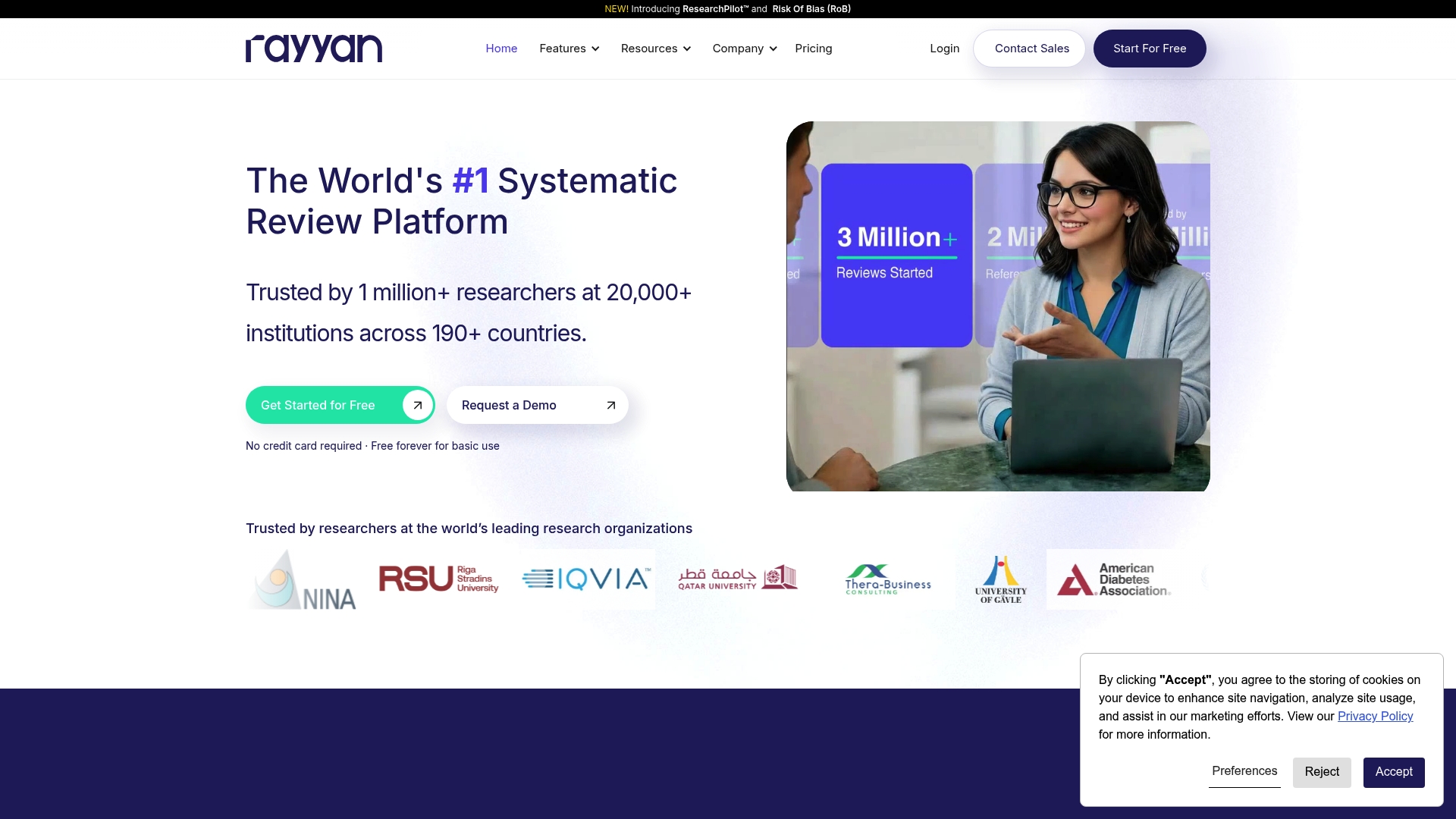
Rayyan reports more than one million researchers use the platform. The system combines machine learning for screening with tools for bias assessment and collaboration. Researchers say the platform can cut review timelines from months to days when workflows fit the project.
Core Features
Rayyan combines AI-assisted screening, relevance ranking, and automated data extraction with import and organization workflows for references. It includes deduplication via the Systematic Auto-Resolver, configurable risk of bias forms, PRISMA diagram exports, audit trails, and a mobile app for reviewing on the go. Team management features let reviewers assign roles and split screening workloads with sampling and randomization.
Key Differentiator
The platform pairs automated screening with team collaboration so reviewers can work in parallel while keeping reproducible records. Rayyan advertises automation such as Auto-Extract Data and an AI Reviewer to reduce manual reading. That combination targets teams running large evidence syntheses who need both speed and an audit trail.
Pros
Rayyan excels at trimming screening time through AI ranking and automation, which helps reviewers focus on borderline records instead of every citation. Collaboration features let multiple reviewers screen and resolve conflicts inside the same project, and role controls prevent accidental edits. The deduplication tool manages large import sets and the audit trails and PRISMA exports support transparent reporting for journals or funders. The mobile app makes short screening sessions practical for busy teams.
Cons
- Some users report the predictive suggestions are inconsistent. This can increase manual checks when inclusion criteria are narrow.
- Several reviewers note a learning curve to use all features efficiently. Training or a trial project helps flatten that curve.
- Pricing transparency is limited and users report costs can be high for long term or large scale projects.
When It May Not Fit
If your team needs guaranteed near perfect AI predictions for highly specific eligibility criteria, this product may fall short. If you lack time for initial training, the platform’s full feature set can feel overwhelming. Organizations with strict budgets or large sustained project volumes should budget for potential platform costs.
Who It’s For
Research teams and systematic review groups in academia, healthcare, and policy will get the most value. Teams that must document decisions with audit trails and export PRISMA flow charts will find the workflow useful. Small projects with minimal screening needs may find the platform more capable than necessary.
Real World Use Case
A healthcare research team imports 5,000 references, runs deduplication, and uses AI ranking to triage citations. Multiple reviewers screen in parallel while Rayyan records conflicts and generates a PRISMA diagram for the manuscript. The team completes screening and extraction weeks earlier than when they relied only on manual methods.
Pricing
Rayyan does not publish standard pricing on its public site. The product listing marks pricing as informational only. Teams should contact the vendor for current licensing options and estimate total cost for large or long running reviews.
Website: https://rayyan.ai
Comparison of alternatives
Intro paragraph: PaperSynapse distinguishes itself by offering an end-to-end workflow that centralizes literature review tasks within a single platform. For researchers needing streamlined operations, PaperSynapse reduces handoffs between tools. In contrast, competitors provide unique strengths in niche areas relevant to diverse team goals.
Workflow Efficiency and Flexibility
PaperSynapse combines configurable extraction fields with label normalization, fully integrating key functions within a dedicated system. Elicit excels in semantic searches that provide citation-backed results, aiding literature discovery. Meanwhile, Rayyan prioritizes team collaboration workflows and screening automation, reducing manual decision-making during large reviews.
Specialized Capabilities
Elicit’s database scale and precise citation linking cater to research teams requiring exhaustive evidence retrieval. On the other hand, Rayyan’s collaboration features, such as reviewer role assignment, support distributed teams screening high reference volumes. PaperSynapse’s methodological simplicity aids data standardization, making it favorable for meta-analysis preparations.
Best fit
- Researchers who manage high-volume batch processing on systematic reviews will benefit from PaperSynapse’s unified extraction and analysis pipeline.
- Teams conducting extensive semantic searches and emphasizing data traceability may prefer Elicit for its citation-level transparency and expansive retrieval capabilities.
- Large collaborative projects with a focus on parallel screening workflows will gain value from Rayyan’s team coordination features.
Our pick
PaperSynapse stands out as the choice for teams seeking integrated operations across data extraction, normalization, and PRISMA-based reviews within one workflow. For research teams focusing solely on extensive literature search and citation accuracy, Elicit may better address specific requirements.
Evaluate these platforms by their features and suitability for systematic literature reviews.
| Product | Core Feature | Best For | Pricing | Limitation |
|---|---|---|---|---|
| Papersynapse | End-to-end workflow for extraction and screening | Researchers extracting metadata | Free/Pro £10/Ultra £25 | Lacks direct PDF import support |
| Elicit | Semantic search over academic papers and clinical trials | High-volume evidence synthesis | Price not published | Steep learning curve for new users |
| Rayyan | AI-assisted screening and relevance ranking | Parallel review workflows | Price not published | Predictive suggestions can vary |
How Can You Handle Large Literature Reviews Faster and More Accurately?
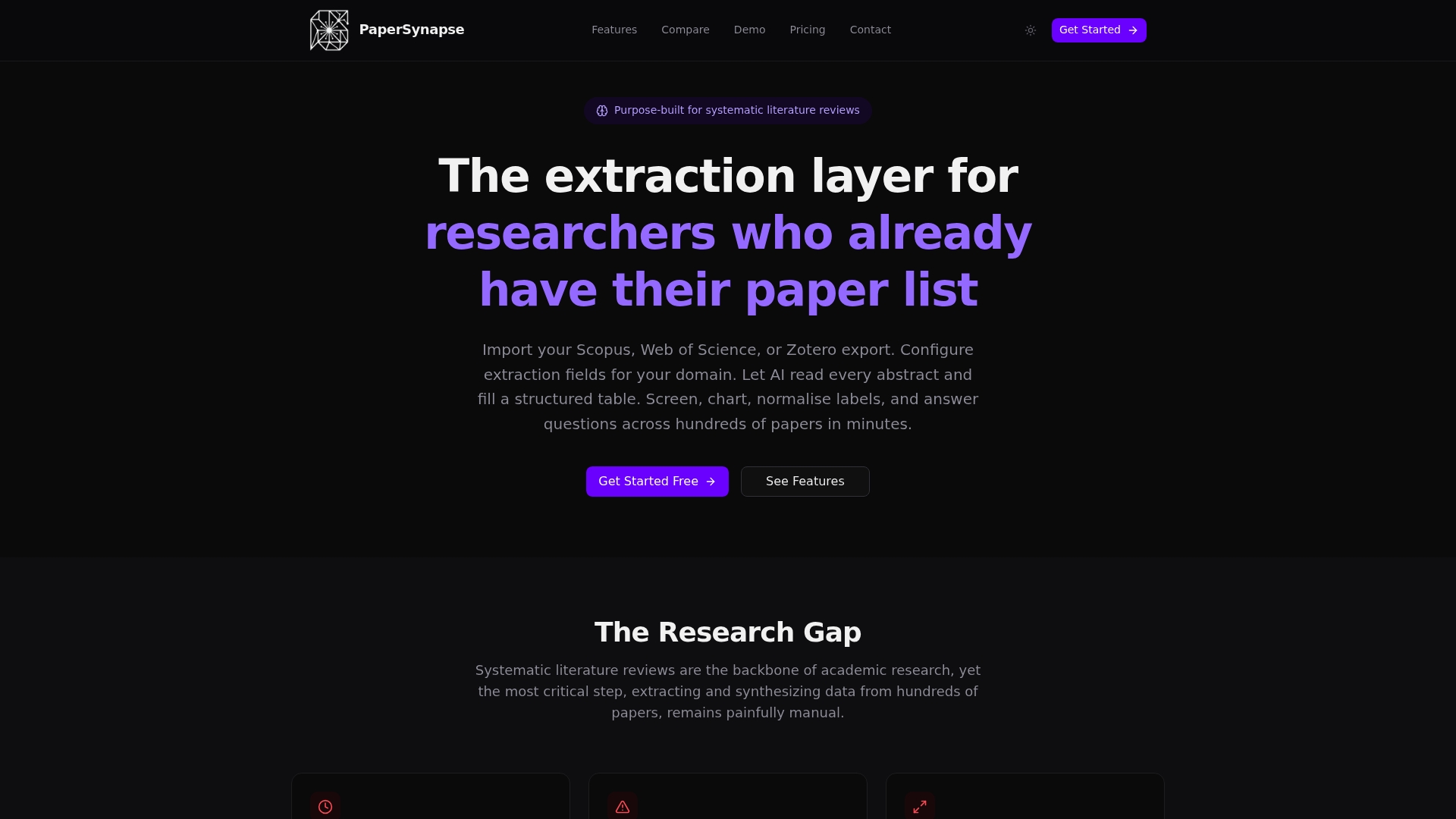
Researchers running systematic literature reviews face the challenge of manual extraction, which slows progress and risks inconsistency. Papersynapse solves that by automating extraction, normalization, and screening in a single workflow. It imports references from sources like Scopus or Web of Science and uses AI to read abstracts and fill structured tables. Teams benefit from consistent labeling and fast batch processing with claims of up to 200 papers handled in under two minutes.
Key benefits include:
- A unified review process reducing handoffs between multiple tools
- Domain-specific extraction without coding
- Easy export of clean CSVs and charts for synthesis
Learn how Papersynapse can shorten your literature review timelines while improving data quality at Papersynapse. Import your CSV or RIS files and create consistent review tables in minutes.
FAQ
How does Papersynapse support literature review automation?
Papersynapse automates the reading of abstracts and populates structured tables. Its centralized workflow combines import, extraction, screening, normalization, and visualization, enabling efficient handling of literature reviews.
What is the difference between Elicit and Papersynapse?
Elicit excels in semantic search over a vast database of academic papers, allowing teams to conduct high-volume retrieval efficiently. Papersynapse, in contrast, focuses on automating the entire workflow from import to analysis within one platform, making it ideal for structured literature reviews.
Can I use Papersynapse for systematic reviews with large article sets?
Yes, Papersynapse can handle hundreds of papers efficiently, allowing researchers to configure extraction fields and use the PRISMA workflow. This capability is especially useful for teams needing to maintain consistency in labeling and decision-making across large datasets.
Does Papersynapse provide any integration with reference managers?
Papersynapse integrates with common sources and supports RIS import from reference managers like Scopus and Web of Science. This functionality streamlines the setup process for extensive research projects.
How does the pricing of Papersynapse compare to Elicit?
Papersynapse offers a free tier with a limit of 50 papers per month, while its Pro and Ultra tiers are priced at £10 and £25 per month, respectively. Elicit does not publicly list its pricing, requiring direct contact for budget considerations.