Top 4 Moara.io Alternatives for 2026
Top 4 Moara.io Alternatives for 2026

Comparing systematic review software that handles large-scale, collaborative reviews while managing imports, extraction, and reproducibility is often confusing. Most platforms hide essential automation features behind paid plans or limit workflow features for small research teams. This comparison sets out the differences in automation, collaboration, and pricing so researchers can match a platform to their project size, automation needs, and budget without getting locked into limited trials or unclear pricing.
Table of Contents
PaperSynapse
At a Glance
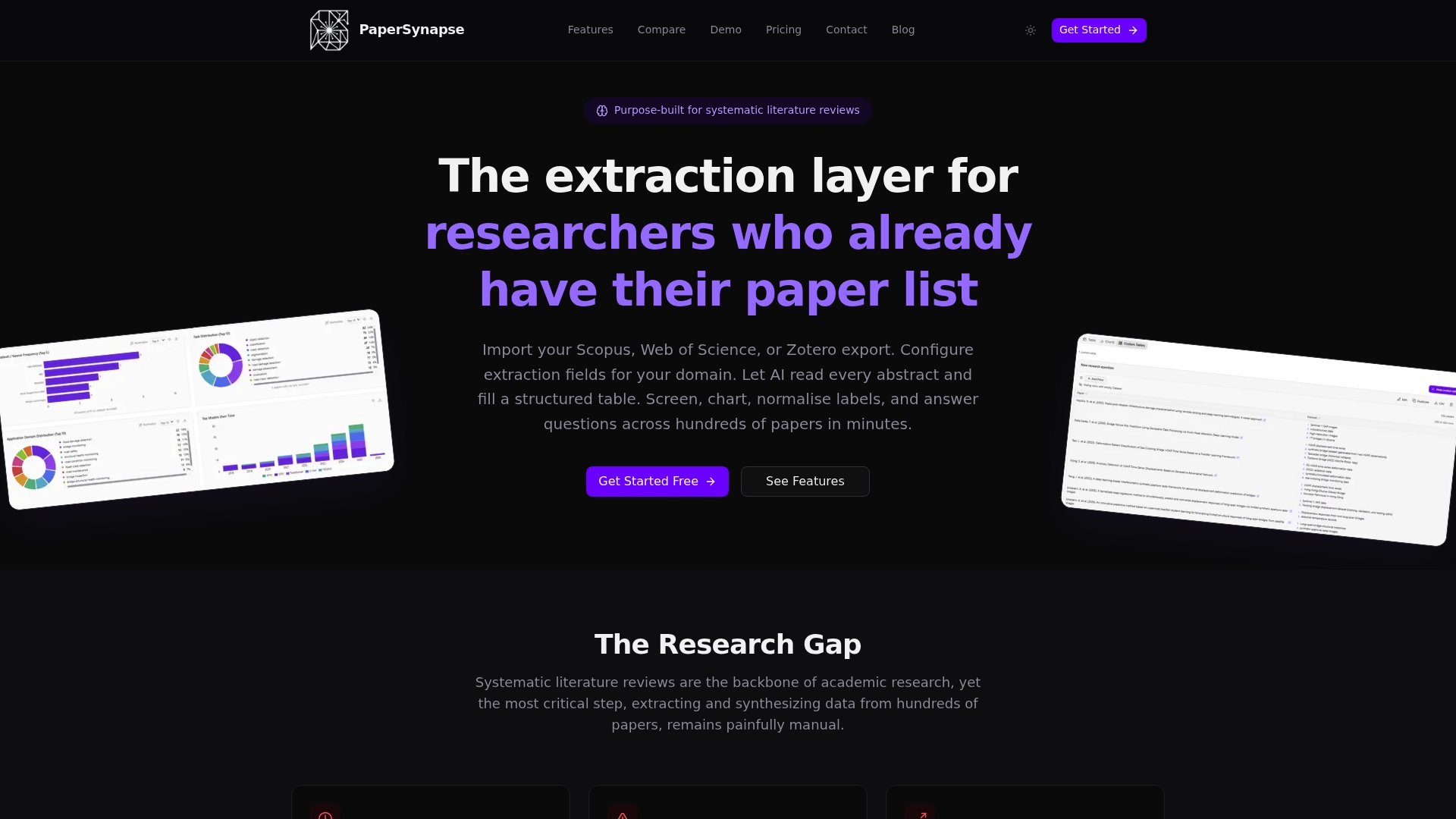
PaperSynapse reports it can process up to 200 papers in under two minutes. That claim highlights the platform’s focus on high‑volume reviews and quick extraction from abstracts. The system accepts exports from major reference sources and pushes results into structured tables and charts.
Core Features
PaperSynapse lets you import references from Scopus, Web of Science, Zotero, CSV, and RIS and configure extraction fields for your research questions. Its AI powered reading of abstracts fills those fields automatically while label normalization unifies similar terms across records. The workflow includes PRISMA screening, custom tables, exportable CSV files, an AI chat assistant, and built in chart generation.
Key Differentiator
The platform centers on customizable AI extraction that routes normalized labels directly into visualizations and exportable datasets. That combination reduces the manual mapping step researchers normally perform after extraction. The normalization plus charting in one environment shortens the path from raw references to analyzable data.
Pros
PaperSynapse speeds large scale extraction by reading abstracts and populating configurable fields automatically. Its PRISMA screening and label normalization support consistent inclusion decisions and comparable variables across studies. The tool also produces visual summaries and lets you export structured CSV data for further analysis in statistical software.
Cons
- Requires exported reference files; does not process PDFs directly.
Notable Integrations
- Scopus
- Web of Science
- Zotero
- CSV import and export
- RIS import and export
Each connector lets you bring bibliographic metadata into the extraction workflow without manual rekeying.
Who It’s For
Researchers and graduate students running systematic reviews or meta analyses with hundreds of records will get the most value. Research teams that need repeatable extraction schemas and label consistency will benefit from the configurable fields and normalization. Smaller single paper reviews may not justify the subscription costs.
Unique Value Proposition
Configurable extraction fields feed normalized labels into charts and exportable tables, removing a common manual bottleneck in literature reviews. That setup turns abstract level text into analyzable variables without multiple file handoffs. For teams working across topics the single workflow keeps extraction rules consistent and reproducible.
Real World Use Case
A university research group imports Web of Science exports, sets extraction fields for dataset types and methods, and runs PRISMA screening across team members. The AI fills fields from abstracts, label normalization maps synonyms, and the team exports clean CSVs for statistical pooling. The generated charts speed preparation of the review methods and results sections.
Pricing
PaperSynapse lists tiered plans at £0, £10/month, and £25/month depending on the number of papers and features required. The free tier is available for limited workloads while paid tiers add higher paper quotas and advanced features. Institutional licensing may apply for larger lab or department needs.
Website: https://papersynapse.com
Rayyan
At a Glance
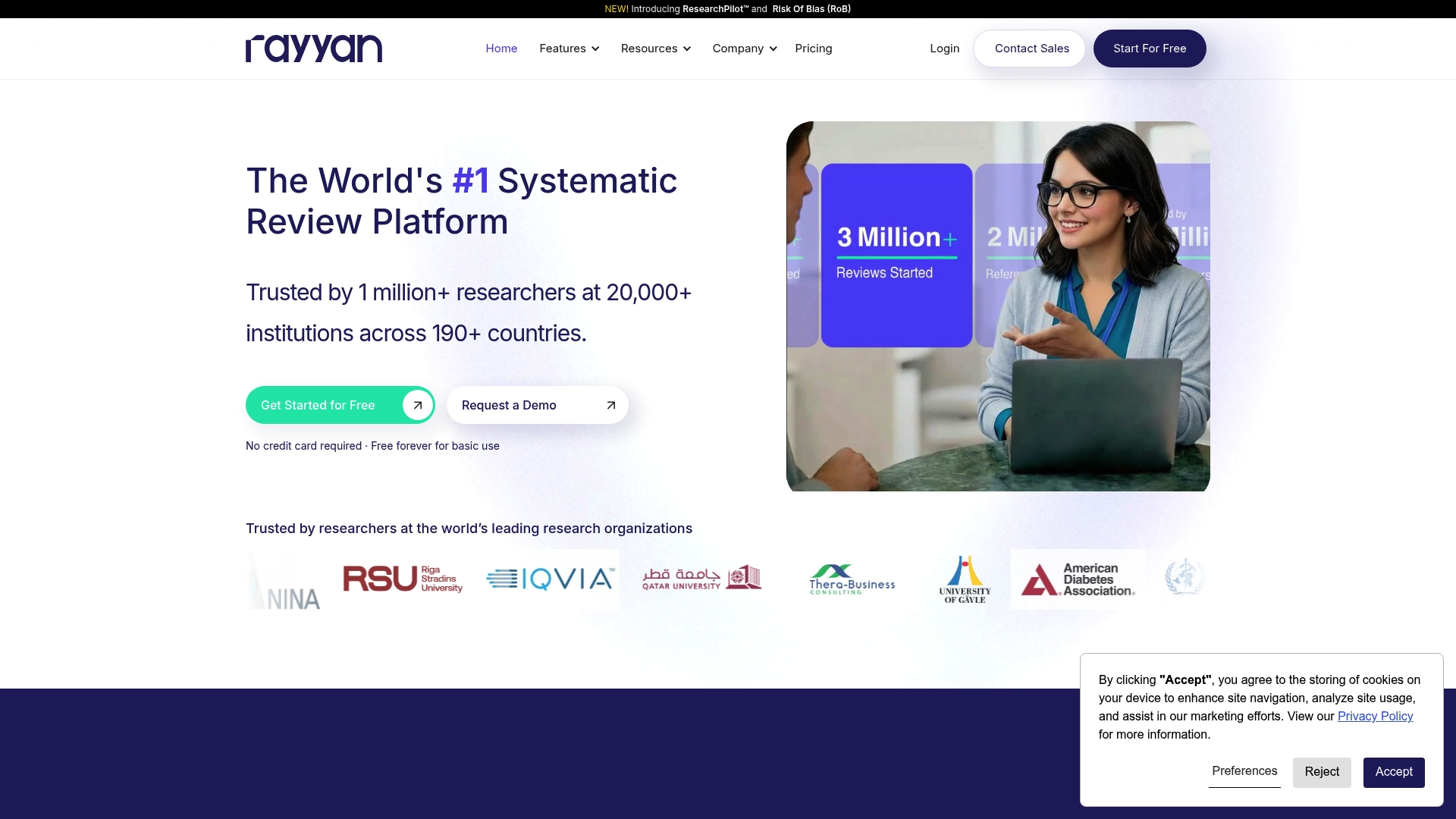
Rayyan reports over 1 million researchers worldwide. According to the company, its workflow can shorten review timelines from months to days. The platform mixes collaborative screening, automated deduplication, and AI-assisted extraction for teams handling large review workloads.
Core Features
Rayyan lets teams import and organize references and invite collaborators with assigned roles. It automatically deduplicates references and supports title and abstract screening along with full-text review and eligibility confirmation. Mobile and web access pair with features such as relevance ratings and auto-extract to reduce manual steps.
Key Differentiator
The vendor positions its AI-assisted automation as the main advantage. That automation focuses on relevance scoring, duplicate resolution, and auto-extraction to reduce routine screening tasks. The approach aims to improve reproducibility across reviewers while keeping collaboration central.
Pros
Rayyan’s free basic tier and collaboration features lower the barrier for new review teams. That user count above signals broad institutional adoption and a large community for troubleshooting and tips. The platform bundles deduplicate references, title and abstract screening, and AI-powered extraction, which together reduce repetitive work and help reviewers focus on judgment calls.
Cons
- Some third-party reviews report limitations in AI prediction accuracy compared with manually curated reviews.
- Several advanced automation features sit behind paid plans or require integrations.
- Complex workflows have a learning curve and often need training for teams new to systematic review software.
When It May Not Fit
If your team expects perfect AI predictions for eligibility decisions, this product may frustrate you. The vendor notes prediction limitations and some teams prefer manual double screening for high-stakes reviews. If your workflow depends on advanced automation without budget for paid plans, you may find the free tier restrictive.
Who It’s For
Academic researchers, health professionals, and systematic review teams who need a collaborative environment will find Rayyan useful. You should have reviewers familiar with standard screening workflows or be prepared to allocate time for training. The platform fits groups that value shared queues and traceable screening decisions.
Real World Use Case
A university research team uses Rayyan to screen thousands of abstracts with multiple reviewers. The team imports references, runs automatic deduplication, then assigns screening roles and resolves conflicts inside the project. That process helps the group produce structured reports and shorten the time spent on routine screening.
Website: https://rayyan.ai
Nested Knowledge
At a Glance
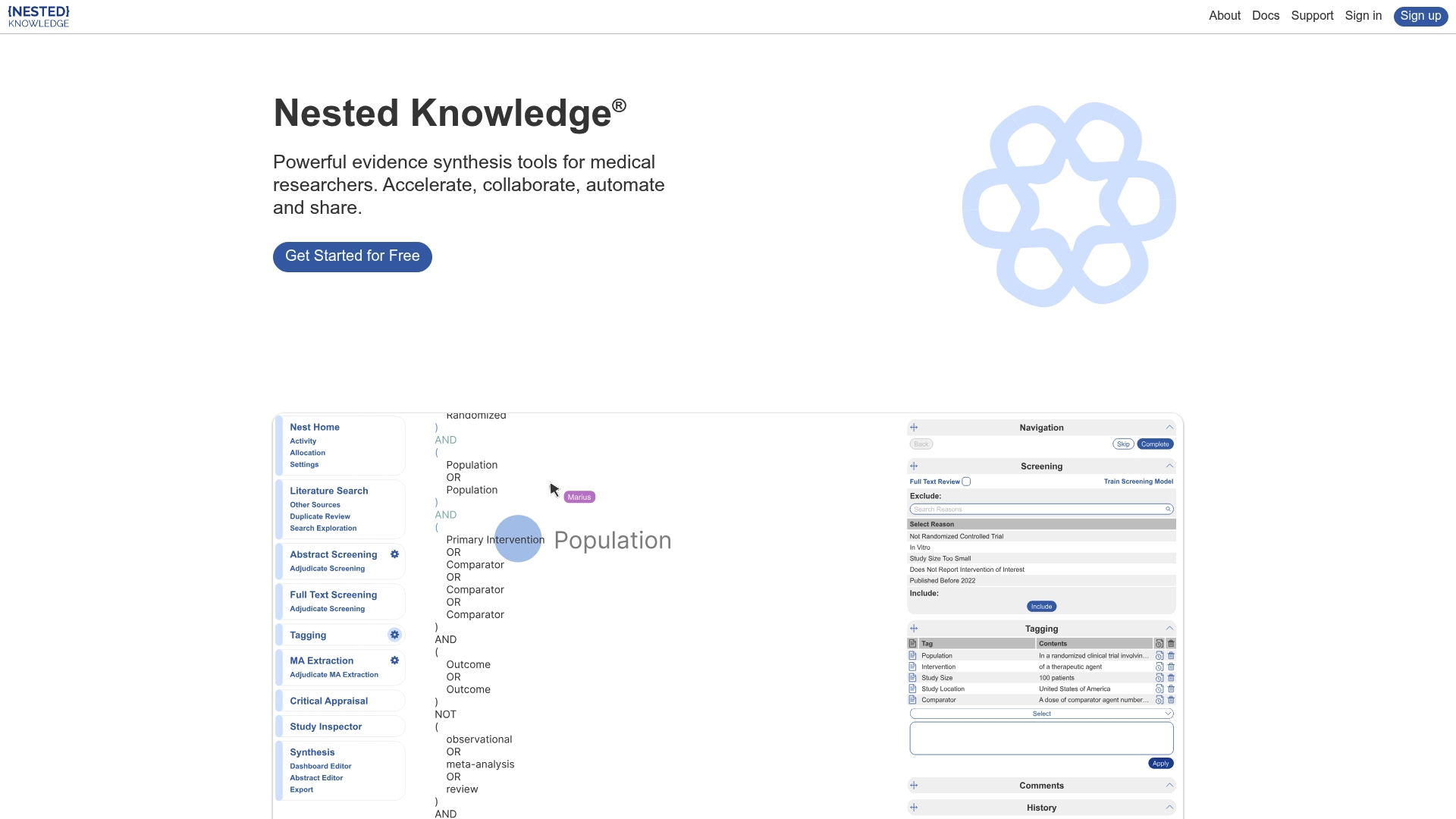
Includes two named components: AutoLit for literature search, screening, and structured extraction, and Synthesis for live updating manuscripts and data dashboards. The platform targets medical research teams running systematic reviews and meta analysis. Live updating reviews and shareable manuscripts are central to how teams keep evidence current.
Core Features
AutoLit combines AI augmented literature search with collaborative screening and structured data extraction. Synthesis supports both qualitative summaries and quantitative analysis, including meta analysis and customizable dashboards. The platform also includes critical appraisal tools, import and export from common research databases, and export formats for manuscripts and data.
Key Differentiator
The single most distinct element is the pairing of AI augmented search with continuous, live updating manuscripts. That pairing lets teams move from screening to publication style outputs without switching tools. Researchers who need ongoing evidence updates will find that workflow particularly concentrated in one product.
Pros
The platform keeps every step of a review inside one workflow so teams avoid manual file transfers between tools. It supports both meta analysis and qualitative synthesis, which reduces the need to stitch separate apps together. Collaboration features let multiple reviewers screen and extract data simultaneously, and the live updating manuscript feature reduces time spent reformatting tables and figures.
Cons
- Requires familiarity with systematic review methodology. New users must learn review design and appraisal to use the platform well.
- Steep learning curve for researchers unfamiliar with evidence synthesis tools. Onboarding can take time for independent investigators.
- Enterprise pricing details are not specified. That opacity may make budgeting hard for small teams.
When It May Not Fit
If you are an individual researcher without prior systematic review experience, the platform may feel complex. Small labs or solo investigators with tight budgets may find unclear pricing prohibitive. Teams that need a lightweight citation manager only will likely find Nested Knowledge more than they need.
Notable Integrations
- Import and export with multiple research databases for reference transfer.
- Support for common data formats such as CSV, RIS, and EndNote for exports.
Who It’s For
Medical researchers and research teams performing systematic reviews and meta analysis will gain the most. Clinical guideline groups and academic teams managing living reviews also match the product profile. If your work requires continuous evidence updates and shared extraction workflows, this product fits your needs.
Real World Use Case
A healthcare research team runs a systematic review on new COVID-19 treatments. They use AutoLit to search and screen citations, extract structured outcome data, and run a meta analysis. The team publishes a living manuscript via Synthesis and keeps figures and tables current as new studies arrive.
Pricing
Pricing is not specified and appears enterprise oriented. The vendor offers free onboarding and pilot support according to the marketing materials. Small teams should request a cost estimate before committing.
Website: https://nested-knowledge.com
Silvi
At a Glance
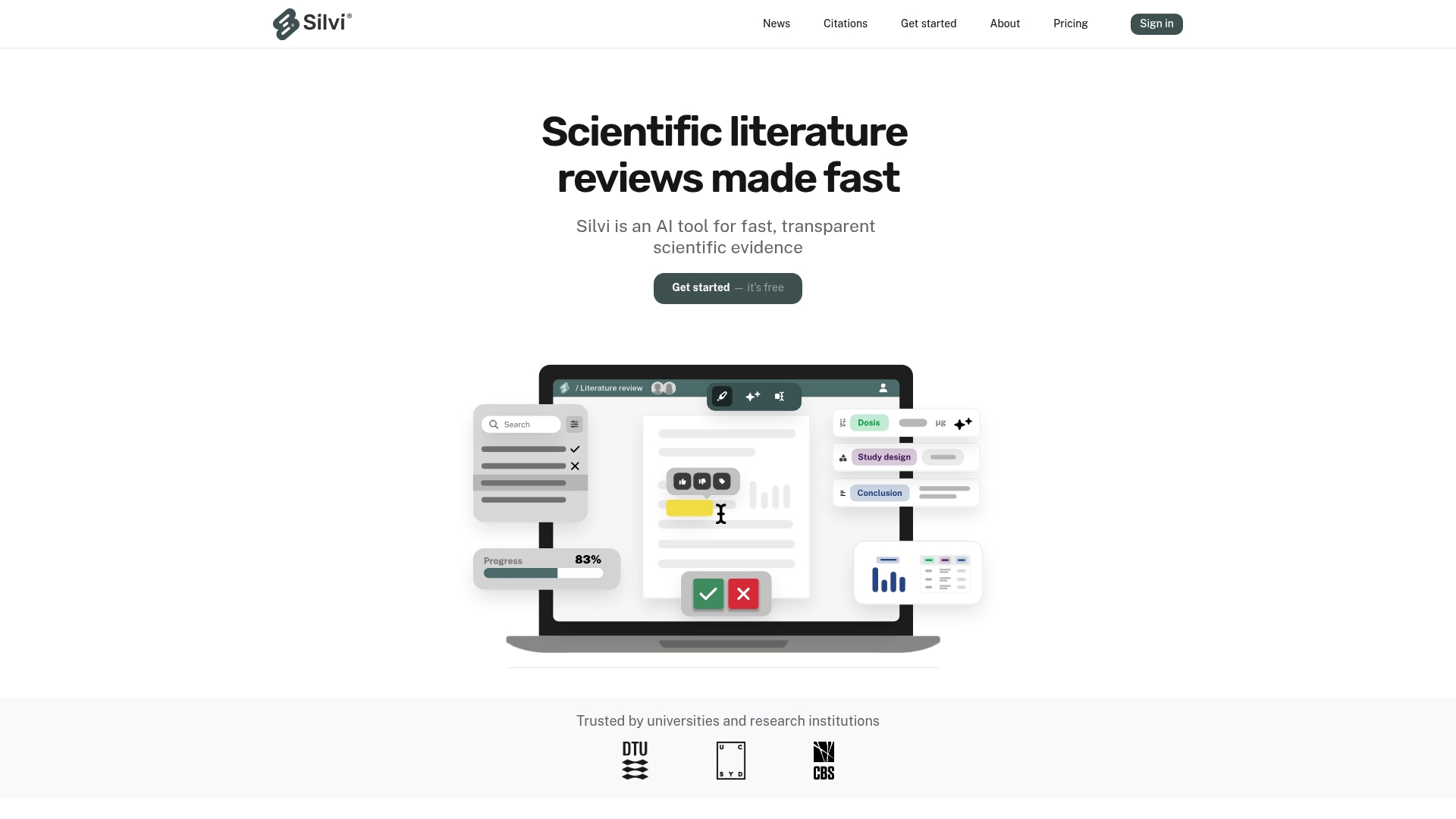
Offers a free tier with unlimited reviews, which lowers the barrier for individual researchers and small teams. Silvi uses AI powered tools to speed up screening, extraction, and collaboration. The platform focuses on transparent, reproducible literature reviews and meta analysis workflows.
Core Features
Silvi imports studies from PubMed, OpenAlex, Zotero, Mendeley, and other sources and manages references in one workspace. It supports bulk screening and individual decisions with AI assistance, plus PDF extraction that highlights text and maps data to structured fields. The platform also generates tables and plots and includes team features for task assignment, blinded decisions, and workflow tracking.
Key Differentiator
Silvi combines AI assisted importing, screening, extraction, visualization, and team collaboration in a single interface. That unified approach reduces handoffs between separate tools during evidence synthesis. The result tailors the workflow for systematic reviewers and meta analysts rather than casual reference management.
Pros
A genuinely accessible entry point is available through the free tier, which lets researchers run full reviews without an immediate paywall. Silvi uses AI to accelerate screening and data extraction, so teams spend less time on repetitive reads. The platform links to common scientific databases and reference managers and adds collaboration controls such as blinded decisions and task assignments. Pricing and cancellation terms are described as clear and flexible.
Cons
- AI suggestions can require manual correction, so reviewers must verify extracted fields for complex studies.
- New users report a learning curve with the interface and workflow, especially for multi reviewer setups.
- Enterprise and advanced features use custom pricing, which requires direct vendor negotiation.
When It May Not Fit
If your project depends on proprietary databases that lack direct connectors, you may need manual downloads and imports. Solo researchers who only need simple reference lists may find the collaboration features excessive. Teams that require guaranteed AI accuracy without human checks will find the current suggestions insufficient.
Who It’s For
University researchers, systematic review specialists, and research groups in health and social sciences will get the most from Silvi. Evidence synthesis teams that need shared workflows and blinded decisions will benefit from the collaboration tools. The platform suits groups preparing meta analyses or regulatory evidence summaries.
Real World Use Case
A medical researcher uses Silvi to screen thousands of titles with AI assisted triage and then extract trial outcomes directly from PDFs. Co authors use assigned tasks and blinded voting to keep decisions consistent. The team exports tables and plots for the methods and results sections of a manuscript.
Pricing
Silvi offers a free basic plan. Paid tiers start with Rapid at €19/month and Plus at €59/month. Enterprise options use custom pricing that requires direct contact with sales.
Website: https://silvi.ai
Comparison of alternatives
PaperSynapse excels in rapid reference extraction and visualization, demonstrating speeds for high-count systematic reviews. Competitor solutions cater to specific team workflows or offer unique tools for synthesis, creating diverse choice factors.
Processing Efficiency for Large-Scale Reviews
PaperSynapse significantly reduces time spent during the initial review stages by employing its AI-based abstract reading and label normalization technology. This provides a streamlined interface for extracting key variables and producing structured datasets ready for statistical analysis or direct visualization. Compared to competitors, whose emphasis may lie elsewhere, PaperSynapse remains the best-equipped solution for high-volume, data-driven research endeavors.
Collaboration and Dynamic Outputs
Nested Knowledge emerges as the leading tool for dynamic evidence synthesis. It supports live updating manuscripts coupled with customizable meta-analytic dashboards that consolidate ongoing review insights. For teams managing studies requiring continuous input or living reviews, these features cater to a broader context compared to standalone extraction and visualization tools emphasized by PaperSynapse.
Best fit
- Researchers prioritizing speed and structured outputs should choose PaperSynapse, thanks to its AI-enabled automation and label normalization system creating ready-to-analyze datasets from abstracts.
- Teams reliant on broad collaboration tools seeking efficient deduplication and shared decision roles will benefit most from Rayyan, which emphasizes teamwork integration.
- Evidence synthesis groups requiring live manuscript updates and dashboard features should turn to Nested Knowledge for workflows encompassing creation through publication.
- New users seeking entry-level review tools with a free plan and clear pricing should explore Silvi, which balances automation with accessibility.
Our pick
For systematic reviewers handling extensive data, PaperSynapse provides efficiency and adaptability tailored to large-scale analysis workflows. Its speed, configurable extraction fields, and automated visualization unify key manual tasks into a concise and effective pipeline. However, teams engaged in live manuscript drafting or dynamic synthesis workflows may find Nested Knowledge a better fit for those purposes.
Researchers seeking systematic review software can compare key features, benefits, and limitations among leading platforms to identify the most fitting solution for their needs.
| Product | Core Feature | Best For | Pricing | Notable Limitation |
|---|---|---|---|---|
| PaperSynapse | AI-powered extraction from bibliographic references with PRISMA screening and charts | Systematic reviews and meta-analyses | Free tier available; paid plans: £10/month, £25/month | Requires bibliographic exports; does not process PDFs |
| Rayyan | Collaborative team screening with AI-assisted relevance scoring and deduplication | Large review team collaborations | Free basic tier; additional features behind paid plans | AI prediction accuracy may not match manually curated reviews |
| Nested Knowledge | AI-augmented searches with live updating manuscripts for evidence synthesis | Medical research and clinical guidelines | Price not published; enterprise-oriented | High learning curve for unfamiliar systematic reviewers |
| Silvi | PDF extraction, AI triage, and blinded team collaboration for data extraction tasks | Academic and health research teams | Free basic plan; paid plans start at €19/month | Requires manual verification of AI-suggested fields |
How to Handle High-Volume Systematic Reviews Beyond Moara.io Alternatives
Researchers and graduate students managing hundreds of papers often struggle with the manual extraction bottleneck in systematic reviews. Papersynapse solves this by automating data extraction from abstracts and normalizing labels, allowing you to process up to 200 papers in under two minutes. This reduces subjective errors and accelerates turning raw references into structured, analyzable data.
Key benefits of Papersynapse include:
- AI-powered reading of abstracts that fills customizable extraction fields
- Unified workflow combining extraction, normalization, and chart generation
- Compatibility with exports from Scopus, Web of Science, Zotero, and CSV
See how Papersynapse supports repeatable extraction workflows for research teams at Papersynapse.com. Import your references and get structured results fast.
FAQ
How does Papersynapse support systematic reviews with high volumes of references?
Papersynapse processes up to 200 papers in under two minutes, allowing for rapid extraction and review. This feature supports researchers who need to analyze large sets of data efficiently. Using Papersynapse can significantly reduce the time spent on systematic reviews.
What is the difference between Papersynapse and Rayyan in handling collaborative screening?
Rayyan excels in enabling collaborative environments by allowing multiple reviewers to screen simultaneously and resolve conflicts directly within the project. Papersynapse, on the other hand, focuses on customizable AI extraction and visualizations, making it ideal for structured datasets from systematic reviews. Choose Rayyan for collaborative screening and Papersynapse for automated data extraction.
Can I use Papersynapse for PRISMA screening?
Yes, Papersynapse includes built-in PRISMA screening features that help ensure consistent inclusion decisions. This capability allows research teams to follow standardized criteria while evaluating studies. Utilizing this feature streamlines the review process for teams adhering to PRISMA guidelines.
What unique feature does Papersynapse offer that distinguishes it from other systematic review software?
Papersynapse offers customizable AI extraction that routes normalized labels into visualizations and structured datasets. This unique feature reduces manual mapping, a common bottleneck in literature reviews, making it easier for researchers to analyze raw references efficiently. This efficiency can lead to quicker project completion for systematic reviews.
How does the pricing of Papersynapse compare to other systematic review software?
Papersynapse offers a tiered pricing model starting with a free tier and going up to £25/month, depending on the number of papers processed and features included. This structure allows researchers and teams to select an option that fits their budget while accessing valuable features for systematic reviews.