PRISMA and automation in screening workflow design for review teams
PRISMA and automation in screening workflow design for review teams
Run screening in five stages: deduplicate and clean metadata, pilot your criteria on a small batch, screen titles and abstracts with dual review or a validated single-reviewer method, confirm eligibility at full text with two independent reviewers, then extract data into a structured template. Automation can triage and prioritize at every stage, but PRISMA 2020 requires you to name the tool, describe its role, and report what it eliminated. Skip the pilot and you’ll rewrite your inclusion criteria halfway through, at three times the cost.
TL;DR:
- Validating automation tools requires measuring positive and negative agreement against a human-labeled sample before trusting them on live screening tasks.
- Deduplication should use both deterministic DOI matching and fuzzy title and author matching, preserving record provenance to defend counts later.
- A pilot batch of 20 to 50 abstracts for calibration helps uncover ambiguous criteria, with disagreement resolution documented for audit purposes.
- PRISMA 2020 mandates clear reporting of automation tools, including tool name, version, and records flagged as ineligible by automation.
- Structured data extraction should be pilot-tested on full texts, with detailed logs of disagreements, to avoid errors accumulating across hundreds of records.
Table of Contents
- How Do You Design a Screening Workflow for a Systematic Review?
- How Do You Set Up a Screening Pilot and Reviewer Roles?
- Can You Safely Use Automation and LLMs in Screening?
- How Do You Prevent Data Extraction Errors?
- How Do You Launch and Scale a Screening Workflow?
- What Automation Can’t Do for You Yet
- Run Your Next Review’s Screening Workflow With PaperSynapse
- Sources
- FAQ
How Do You Design a Screening Workflow for a Systematic Review?
A staged design beats an ad hoc one because each stage produces a specific, auditable output that feeds the next. Here is the sequence in the order PRISMA 2020 expects reviewers to document it.
- Deduplication and metadata cleaning. Before anyone screens a single abstract, normalize author names, titles, DOIs, and character encoding across your imported records. Messy metadata causes both duplicate matches and missed duplicates, which quietly inflates your denominator and confuses reviewers who see the same paper twice under slightly different formatting. A deterministic match on DOI, followed by a fuzzy match on title and author, catches far more duplicates than either method alone, and you should preserve provenance of every record you drop so you can defend the count later.
- Pilot testing. Before full-scale screening, run your entire team through the same small batch, discuss every disagreement, and rewrite the criteria that caused confusion.
- Title and abstract screening. Choose dual independent review, single-reviewer with verification, or proportional double-screening of a random sample, depending on team size and stakes.
- Full-text screening. Two reviewers assess eligibility independently and log a specific exclusion reason for every rejected paper, not just “not relevant.”
- Extraction and PRISMA counts. Every number that moves from one stage to the next, records identified, duplicates removed, records screened, reports excluded with reasons, gets logged for the flow diagram as you go, not reconstructed afterward from memory.
PRISMA 2020 specifically asks you to state how many reviewers screened each record, whether they worked independently, and how conflicts got resolved. Trying to answer those questions retroactively after screening is finished is where most review teams lose a week they didn’t budget for.
How Do You Set Up a Screening Pilot and Reviewer Roles?
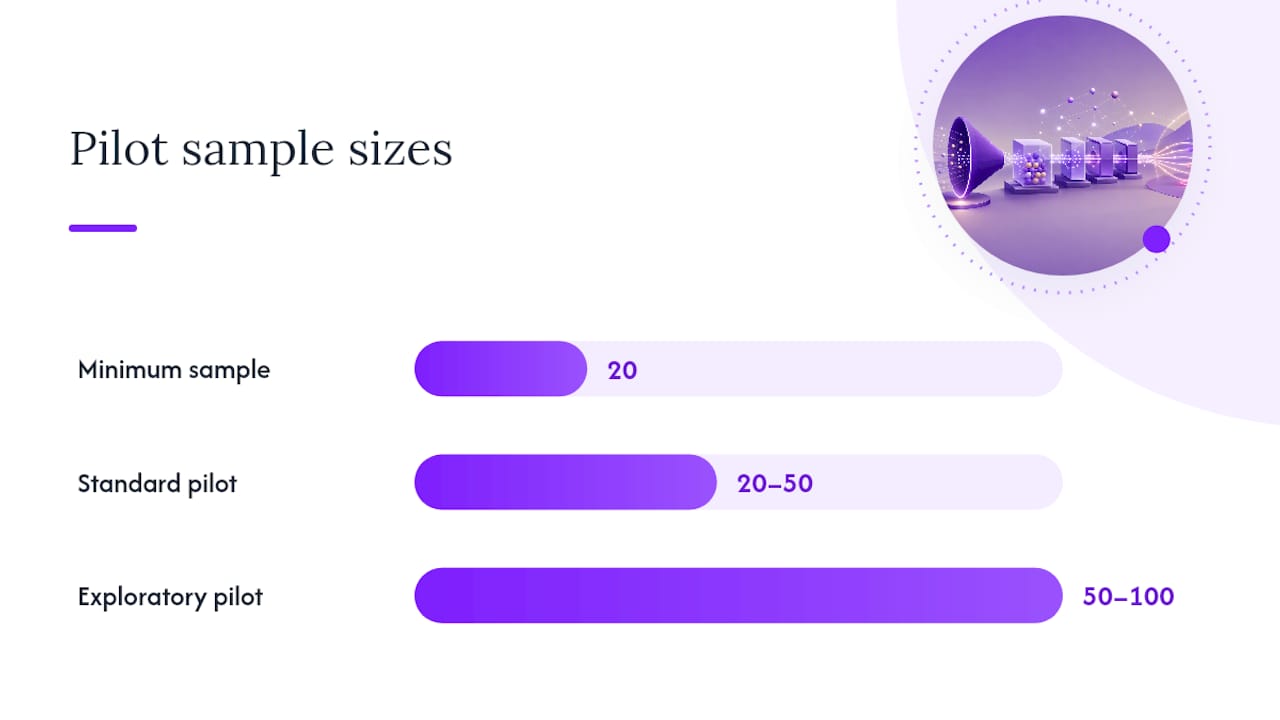
A pilot isn’t a formality. It’s the cheapest insurance you’ll buy in the entire review. Twenty to fifty abstracts is the standard range for calibration, with 50 to 100 preferred when your topic is broad or your criteria are still fuzzy. Everyone screens the identical batch, then you sit down and argue about every disagreement until the criteria are unambiguous.
Here’s a copy-ready checklist to run that pilot:
- Pick 20 to 50 abstracts at random from your deduplicated set (scale to 100 for exploratory reviews).
- Have every reviewer screen independently, blind to each other’s decisions.
- Calculate agreement, then meet to resolve every discrepancy and rewrite the checklist wording that caused it.
- Assign a reviewer matrix: who screens which batch, who verifies, who arbitrates.
- Route unresolved conflicts to a third reviewer, and log the resolution with a timestamp and rationale.
- Record, at minimum, per paper: reviewer ID, decision, exclusion reason, date, and screening round.
Pro Tip: *Don’t skip the discussion step even when agreement looks high.
That matrix and log become your audit trail. Reviewers change, memories fade, and six months from now a peer reviewer will ask exactly how a conflict got resolved. If it isn’t written down, it didn’t happen.
Can You Safely Use Automation and LLMs in Screening?
Yes, with guardrails. Automation belongs on triage and prioritization tasks where it saves reviewer hours, not on final elimination decisions made without human confirmation.
A systematic review of LLM performance on screening tasks found a median positive percent agreement with human reviewers of roughly 0.92 for title and abstract screening, with negative percent agreement around 0.89. That’s strong, but “strong” isn’t “reliable enough to skip validation.” The same review flagged wide variance across studies and models, and called for cautious implementation rather than blanket trust.
Three things separate safe automation from a liability:
- Use cases that fit. Deduplication, relevance ranking, and flagging likely-irrelevant records for faster human review are proven strengths. Final exclusion of a record with no human check is not.
- A validation plan. Hold out a human-labeled sample, measure PPA and NPA against it before trusting the tool on live records, and re-check periodically as your corpus shifts.
- A stopping rule. Decide in advance what agreement threshold triggers a pause and manual review, and write that threshold down before you start, not after a bad batch surprises you.
Roughly 92% median agreement between LLMs and human reviewers on title and abstract screening still leaves a meaningful minority of decisions where the tool and a trained reviewer would part ways. That gap is exactly why PRISMA treats automated screening as something to disclose, not something to hide.
PRISMA 2020 requires exact reporting language when automation touches your selection process: identify the tool and version, describe its role, and where it removed records, use the phrase “records marked as ineligible by automation tools” in your flow diagram. Vague phrasing like “AI assisted screening” without specifics will draw questions from reviewers who know what PRISMA actually asks for.
How Do You Prevent Data Extraction Errors?
Extraction is where most systematic reviews quietly lose accuracy, because it happens after the excitement of screening has worn off and fatigue sets in. Standardized templates fix most of it.
Build a semi-structured extraction form with a companion data dictionary that defines every field in plain language before anyone starts pulling numbers. Two people should independently extract from the same handful of papers early, then compare, because a structured database design with user-friendly entry forms catches systemic misunderstandings before they spread across hundreds of records.
- Design fields around your review question first, not around what’s easy to copy from an abstract.
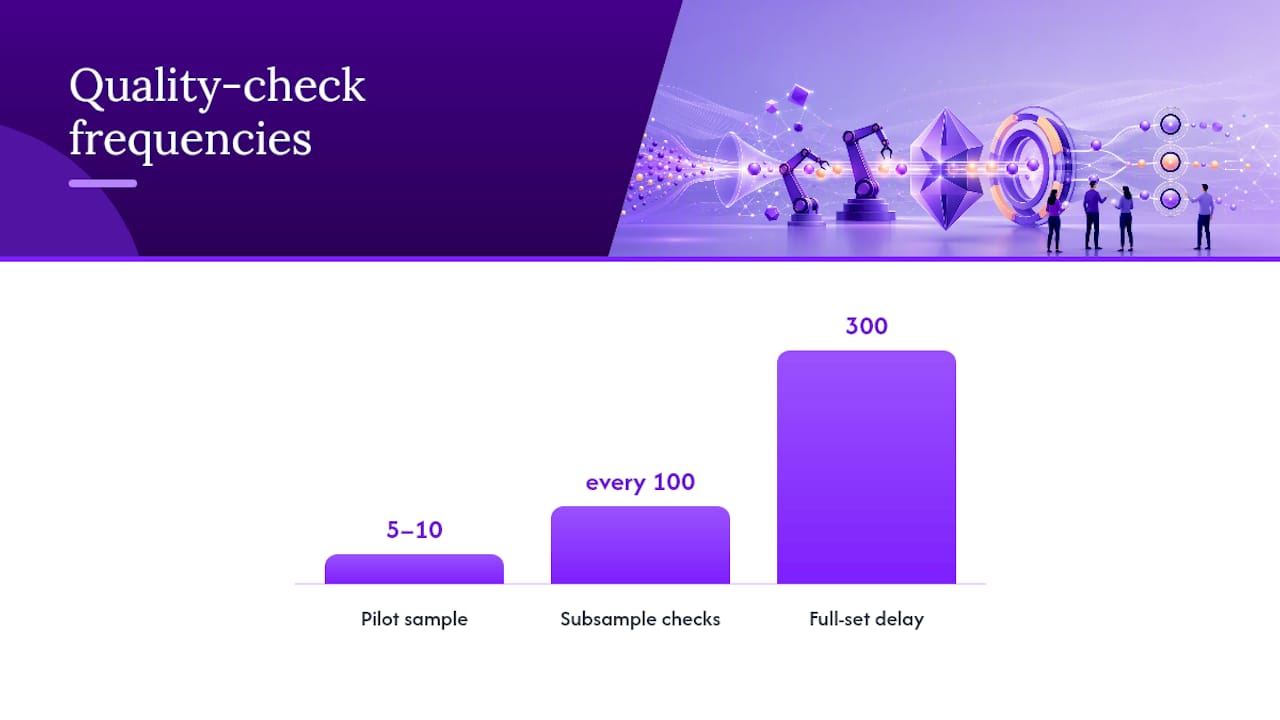
- Pilot the extraction template on 5 to 10 full texts and compare outputs line by line.
- Compare a fresh subsample every 100 records rather than waiting until extraction is finished to check quality.
- Log every adjudicated disagreement with the reason and the final decision, not just the corrected value.
- Normalize units, date formats, and categorical labels as you go, not in a cleanup pass at the end.
Frequent partial comparisons catch a misread column or a misunderstood variable while it’s still cheap to fix. Waiting until all 300 papers are extracted to run your first quality check means redoing all 300.
How Do You Launch and Scale a Screening Workflow?
Start small, verify early, and only scale once your pilot numbers hold up. Here’s what week one should look like:
- Import references from Scopus, Web of Science, or your reference manager, and run deduplication immediately.
- Draft your screening checklist and run the 20 to 50 abstract pilot with the full team.
- Set up your reviewer matrix, conflict-resolution path, and minimal audit fields before screening opens for real.
- Configure whatever automation you’re using on the pilot batch first, and validate against your human-labeled sample before trusting it on live records.
- Export your running PRISMA counts as you go, not at the end, so the flow diagram builds itself alongside the work.
A platform like PaperSynapse supports this sequence directly: importing CSV or RIS files from reference managers, running AI-assisted extraction on abstracts, and exporting structured tables that map onto PRISMA counts. The platform can process large numbers of papers quickly, which matters most at the pilot stage, when you want fast feedback on whether your criteria actually hold up before committing weeks to full-scale screening.
What Automation Can’t Do for You Yet
LLMs are genuinely useful for triage, but they’re only as good as the prompt and the validation behind them. A model that scores well on one review’s abstracts can perform worse on another topic with different terminology and structure, which is exactly why a single accuracy number from someone else’s review tells you little about your own.
Record the tool name, version, and validation results for every automated step, the same way you’d record a statistical software version in your methods section. Reproducibility depends on it. And when a decision is genuinely ambiguous, a title that could plausibly fit two different inclusion criteria, a borderline sample size, trust the human reviewer over the classifier. Automation earns its place by clearing the obvious cases fast, not by resolving the hard ones.
— Ubada
Run Your Next Review’s Screening Workflow With PaperSynapse
PaperSynapse handles the workflow this article just walked through, without forcing you to stitch together a spreadsheet, a separate dedup tool, and a screening app that don’t talk to each other. Import your references directly from Scopus or Web of Science, run deduplication and AI-assisted title/abstract triage in the same platform, then move straight into structured extraction and PRISMA-ready exports, all from one place, with no PDF wrangling required.
If you’re planning a pilot batch this month, that’s the ideal time to test it: run your 20 to 50 abstract calibration set through PaperSynapse’s extraction tables and see whether the AI-assisted labels match your team’s manual decisions before you commit to full-scale screening. The Free plan covers a limited volume for exactly that kind of test run, and the Pro and Ultra tiers scale up as your paper count grows. Start on the free tier at Papersynapse and see how your first batch processes.
Sources
Keep these open in a tab while you write your protocol:
- PRISMA 2020 explanation and elaboration: updated guidance and exemplars for reporting systematic reviews | The BMJ
- Large language models show promising performance for some systematic review tasks but call for cautious implementation: a systematic review
- Practical steps to design and build data-extraction tools for complex systematic reviews
- Metadata cleaning and preprocessing guidance
FAQ
How Many Abstracts Should a Screening Pilot Include?
Most methodology guidance recommends 20 to 50 abstracts for a standard pilot, scaling to 50 to 100 when the topic is broad or the inclusion criteria are still unsettled. The goal is enough disagreement to surface ambiguous wording, not exhaustive coverage.
Should Two Reviewers Screen Every Record?
Dual independent screening is the PRISMA-preferred standard, but proportional screening, double-screening a random sample while one reviewer handles the rest, is an accepted compromise when team capacity is limited. Full-text screening should stay dual wherever possible, since exclusion decisions there carry more weight.
How Should Automation Use Be Reported in PRISMA?
PRISMA 2020 requires naming the tool and version, describing its exact role, and using the flow diagram phrase “records marked as ineligible by automation tools” for anything it removed. Vague references to “AI screening” without those specifics fall short of the standard.
What Fields Should a Screening Record Include for Auditability?
At minimum, log reviewer ID, decision, exclusion reason, date, and screening round for every paper. That’s enough to reconstruct any conflict-resolution decision months later without relying on memory.
How Do You Validate an LLM Before Trusting It on Live Records?
Hold out a human-labeled sample and measure positive and negative percent agreement before deployment. Published reviews report median PPA around 0.92 for title and abstract tasks, but that figure varies by model and topic, which is why you validate on your own corpus rather than assuming someone else’s benchmark applies. Platforms like PaperSynapse let you run that comparison directly against your pilot batch before scaling up.