Protocol First Systematic Review Data Extraction With AI, Reproducible
Protocol First Systematic Review Data Extraction With AI, Reproducible
The minimum workable process is this: build a PICO-aligned extraction form, pilot it on a small set of diverse studies, run dual extraction on every critical outcome, log each data transformation with its formula and source page, then export a clean, documented dataset. The Cochrane Handbook has recommended this basic shape for years, and the UNC Health Sciences Library still flags extraction as the slowest phase of any review. Tools like PaperSynapse can prefill fields from abstracts, but every number that feeds a meta-analysis still needs a human set of eyes on it.
TL;DR:
- Extract core data aligned with the PICO framework, including population, intervention, comparator, outcome, and study metadata, ensuring repeatability and clarity.
- Pilot test the extraction form on diverse studies, revise based on disagreements, and prioritize dual extraction for critical data points like effect estimates.
- Use relational database structures for complex reviews with multiple outcomes or arms, and maintain detailed provenance, transformation, and version control logs.
- Implement a human validation step for AI prefill tools, tracking modifications and confidence levels to preserve reproducibility and accuracy.
- Regularly measure extraction agreement rates, document decision logs, and update the codebook to sustain quality and transparency throughout the review process.
Table of Contents
- What Data Should You Extract for a Systematic Review?
- How Do You Design and Pilot a Data Extraction Form?
- Should You Use a Spreadsheet or a Dedicated Extraction Platform?
- How Should Teams Handle Dual Data Extraction and Disagreements?
- How Do You Transform and Document Extracted Statistics?
- What’s the Best Way to Organize and Export Extracted Data?
- How Do You Measure and Maintain Extraction Quality?
- How Can You Integrate AI Tools Without Losing Reproducibility?
- Best Practices for Training and Calibrating Extractors
- Managing and Documenting Decisions During Data Extraction
- Ethical Considerations and Data Privacy in Systematic Reviews
- Realities From the Field: How Teams Actually Ship a Reliable Extraction
- Try PaperSynapse for Your Next Extraction
- Sources
What Data Should You Extract for a Systematic Review?
Every extraction form should answer one question for each included study: could someone reproduce your synthesis using only this row of data? That means capturing more than outcome numbers. It means capturing enough context that a reader two years from now understands exactly what those numbers meant.
Start with the PICO backbone, since it maps directly onto how most reviews get analyzed and reported. The living review of extraction automation found that PICO elements are the most consistently extracted fields across published reviews, which tells you where reviewers agree the baseline sits.
Your core variable set should include:
- Population descriptors: sample size, age range, diagnostic criteria, setting (inpatient, community, school), and recruitment method.
- Intervention details: dose, frequency, duration, delivery mode, and who administered it.
- Comparator specifics: active control, placebo, usual care, or waitlist, described with the same granularity as the intervention.
- Outcome definitions: the exact measure used, the instrument or scale, and the direction that indicates improvement.
- Study-level metadata: first author, publication year, country, funding source, design (RCT, cohort, crossover), and registration number if one exists.
At the outcome-cell level, precision matters more than volume. For continuous outcomes, record the mean and standard deviation (or standard error, if that’s what’s reported) at each timepoint, plus the instrument used to generate that number. For dichotomous outcomes, record the numerator and denominator, not just a percentage.
Provenance capture belongs in the same row as the data, not in a separate notes document you’ll forget to check later. Record the PDF page number, the figure or table the value came from, and whether the study appeared across multiple linked reports (a trial registration, a protocol paper, and a results paper describing the same cohort). If you had to email an author for a missing standard deviation, note the date of that correspondence and what they sent back.
A few situations require extra derivation before the data are usable. If a paper reports a percentage change from baseline instead of raw counts, you often need the original sample size to back-calculate the actual numbers. And when a study reports outcomes at three, six, and twelve months, decide up front whether your protocol calls for extracting every timepoint or only the pre-specified primary one. Extracting everything “just in case” sounds thorough, but it multiplies your reconciliation workload for data you may never analyze.
Pro Tip: Build a “timepoint priority” column into your form before extraction starts. Mark each study’s primary endpoint as it’s extracted, so you’re not re-reading full texts three weeks later trying to remember which measurement mattered most.
How Do You Design and Pilot a Data Extraction Form?
The biggest mistake teams make is building the electronic form first and defining the variables second. Do it backward and you’ll spend the first two weeks of extraction rewriting column headers. A synthesis of 25 guidance documents on this exact problem found that 18 of them recommended pilot testing before full rollout, and 14 recommended building a customized form rather than reusing a generic template wholesale, according to research published in BMJ Evidence-Based Medicine.
Work through these steps in order:
- Draft the variable list on paper or in a plain document first. List every field you think you’ll need, the response options for categorical fields, the acceptable units for numeric ones, and any derivation rules (like how you’ll handle a study reporting standard error instead of standard deviation).
- Write a codebook before you write a spreadsheet. For each variable, define the name, a one-sentence definition, the allowed values, any transformation formula, and an example of how the provenance field should look (e.g., “Table 2, page 6, primary endpoint at 12 weeks”).
- Select 3 to 5 heterogeneous studies for a pilot round. Pick studies that differ in design, outcome reporting style, and completeness, not just the first five in your citation manager.
- Extract independently, then compare. Two extractors working from the same codebook should produce near-identical rows. Where they don’t, that’s your signal.
- Revise the form and repeat if disagreements were substantial. A pilot round that surfaces only minor wording issues means you’re close. One that surfaces structural disagreements (different people interpreting “primary outcome” differently, for instance) means you pilot again after revision.
The UNC library guidance recommends piloting on 3 to 5 diverse studies specifically because a narrow pilot set hides the ambiguities that only show up in outlier papers, like a crossover trial or a cluster-randomized design that doesn’t fit your form’s assumptions.
Not every field needs the same rigor. Full dual extraction, where two people independently fill the form and reconcile differences, should apply to primary outcomes, effect estimates, and risk-of-bias judgments. These are the numbers your conclusions rest on. Lower-stakes fields, like study setting or funding source, can often go through single extraction with a second person checking for accuracy rather than re-extracting from scratch. The BMJ synthesis found 17 of the 25 guidance documents specifically recommended dual extraction for critical data points, which is a strong enough consensus to treat as a floor, not a suggestion.
Pro Tip: Keep a running “ambiguity log” during piloting. Every time an extractor pauses and thinks “wait, does this count?”, write it down. That log becomes your codebook’s next revision, and it’s the single fastest way to stop repeat disagreements later.

For teams who want a template that already maps Cochrane’s structure onto a working form, a practical extraction playbook can save you the first draft.
Should You Use a Spreadsheet or a Dedicated Extraction Platform?
The right tool depends on how complicated your data actually get, not on what your lab already owns a license for.
A flat spreadsheet in Excel or Google Sheets works fine when each study contributes one row with one set of outcomes. Small reviews with a handful of comparable trials rarely need more than that, and a shared Google Sheet keeps collaboration simple. The trouble starts when a single study reports multiple outcomes, multiple timepoints, or multiple comparison arms. At that point you’re either duplicating rows awkwardly or cramming several data points into one cell, and both approaches make errors easy to hide.
That’s when a relational structure earns its complexity. Reviews involving multiple effect sizes per study benefit from normalized tables, where studies, outcomes, and comparisons live in separate linked tables rather than one wide sheet. The DECiMAL guideline lays out a 10-step process for building exactly this kind of structure using open-source tools, and its case example shows how a relational design reduces duplicated entry and makes discrepancy detection far more tractable in complex reviews.
Dedicated systematic review platforms sit between these two options. They typically offer built-in dual-extraction workflows, automatic discrepancy highlighting when two reviewers disagree, and export formats built for meta-analysis software. If you’re evaluating one, look for:
- A genuine audit trail that timestamps every edit and who made it.
- Export formats compatible with your analysis software (R, RevMan, Stata).
- Built-in reconciliation views that show both extractors’ entries side by side.
- Reasonable per-seat or per-review pricing that scales with your team size.
Semi-automated AI tools are the newest category, and they solve a different problem: the sheer time cost of reading hundreds of abstracts and typing structured data by hand, as discussed in The Best AI for Researchers: A Workflow-Based Guide. Where they add real value is bulk prefill, entity recognition (pulling out sample sizes, drug names, or outcome measures automatically), and normalization, cleaning inconsistent labels like “MDD,” “major depression,” and “major depressive disorder” into one category. Their documented limit is precision on quantitative outcome extraction. The living review of automation methods notes that while large language models are increasingly used for relation extraction, reproducibility for exact numeric values still lags behind trained human extractors, which is exactly why every AI-assisted workflow needs a manual verification pass built in.
How Should Teams Handle Dual Data Extraction and Disagreements?
Two models dominate the field. In independent parallel extraction, two people fill out the same form from the same paper without seeing each other’s work, then compare. In single-extract-plus-checker, one person extracts and a second reviews that extraction against the source rather than starting fresh. The first catches more errors but costs roughly double the time; the second is faster and still catches most transcription mistakes. The Cochrane Handbook’s baseline recommendation is at least two people involved for critical items, without mandating full independent duplication on every single field.
A sensible cadence: compare the first 10 studies as a checkpoint before your team scales up. This surfaces systemic misunderstandings early, before you’ve extracted 150 studies with the same misinterpretation baked in. After that early checkpoint, move to rolling batch comparisons, checking every 20 to 30 studies rather than every single one, unless disagreement rates spike.
- Extract independently for all primary outcomes and risk-of-bias domains.
- Run a dataset diff comparing both extractors’ entries, flagging any cell that doesn’t match exactly.
- Apply a numeric tolerance threshold for rounding differences (a difference of 0.01 in a calculated SD usually isn’t worth a full discussion; a difference of 5 in a sample size is).
- Color-code the discrepancy report so real disagreements stand out from formatting noise.
- Escalate unresolved disagreements to a third reviewer or the review’s senior methodologist, and record the final decision and its rationale in the codebook.
The DECiMAL guideline specifically recommends frequent subset comparisons between reviewer datasets for complex reviews, precisely because catching a systematic misinterpretation at study 10 is far cheaper than catching it at study 150.
Pro Tip: Write your arbitration rule down before extraction starts, not after your first disagreement. “Third reviewer decides, documented in the codebook” is a one-line policy that prevents a lot of awkward mid-project debate about whose interpretation wins.
How Do You Transform and Document Extracted Statistics?
Raw reported numbers rarely arrive in the format your analysis needs, and every conversion you make is a place errors can creep in silently.
Common conversions include turning a standard error into a standard deviation (SD = SE × √n), converting a confidence interval into an SD when the paper reports only a CI, and back-calculating counts from a reported percentage when you know the denominator. None of these are difficult formulas. The risk isn’t the math, it’s doing the math in your head and typing only the final number into a cell, leaving no way for anyone (including future you) to check it.
Store the transformation next to the value, not in a separate document. A practical pattern: keep the original reported value in one column, the formula applied in an adjacent column, and the final derived value in a third. Add who performed the transformation and when.
- Original value column: what the paper actually reported, verbatim.
- Formula column: the exact conversion used, written out (e.g., “SD = SE × √(48)”).
- Derived value column: the number that goes into your analysis dataset.
- Transformer and date columns: who did the math and when, for auditability.
- Source location column: page and table number where the original value appeared.
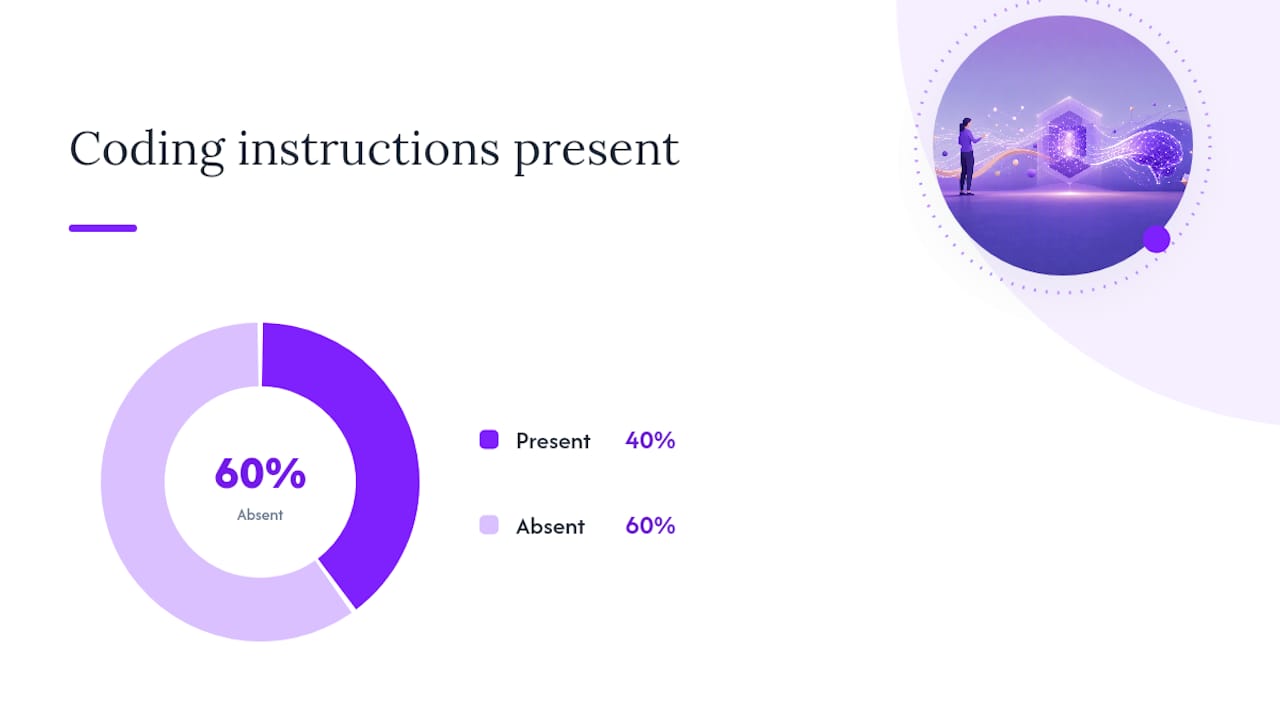
The BMJ synthesis of 25 guidance documents found that detailed coding instructions, including how to handle exactly this kind of derivation, appeared in 10 of the 25 reviewed guidance sources, a reminder that most published guidance still leaves transformation documentation as an afterthought rather than a required step.
Multiplicity is the other quiet source of error. When a trial produces a protocol paper, a conference abstract, and a full results paper, treat those as one study-level record, not three separate rows. Pick the most complete report as your primary source, but keep provenance links to the other reports so a reader can trace where supplementary details (like a missing SD found only in the protocol) actually came from.
A transformation log, whether it’s a dedicated column per derived cell or a separate log sheet referencing row IDs, keeps every calculated value traceable back to its source. Without it, a reviewer six months from now (possibly you) has no way to tell whether a number was reported directly or calculated, and no way to catch a transcription error before it reaches a forest plot.
What’s the Best Way to Organize and Export Extracted Data?
How you store extracted data determines whether your review can survive an update, a co-author’s laptop crash, or a journal reviewer asking for your raw dataset.
Flat files work well for straightforward reviews: one row per study, one column per variable, exported as a single CSV. They’re easy to open in any statistics package and easy for a second reviewer to skim quickly. Relational schemas make more sense once you have multiple outcomes or multiple comparison arms per study; a “studies” table linked to an “outcomes” table by a study ID avoids the wide, sparse spreadsheets that make errors hard to spot.
Whatever structure you choose, package it for reuse:
- A CSV of the final dataset, plus a codebook document defining every column.
- A README explaining the file structure, any abbreviations, and how missing data are coded (blank cell versus “NR” for not reported versus “NA” for not applicable).
- JSON exports for nested data, like a study with multiple linked outcome objects, when a flat CSV would force awkward duplication.
- Timestamped, versioned exports rather than one file that gets overwritten repeatedly.
Back up extracted data the same way you’d back up a manuscript draft: more than one location, access controls that track who can edit versus view, and a clear record of which version fed which analysis. If your review will need a future update (a “living review” model is increasingly common in fast-moving fields), a well-documented package means your successor doesn’t have to re-derive your logic from scratch.
If you plan to share your dataset publicly, alongside the paper or in a repository, include a licensing note, the codebook, and a short provenance audit showing how key values were derived. Reviewers and readers trust a dataset more when they can see exactly how a number got from the original PDF to your forest plot.
How Do You Measure and Maintain Extraction Quality?
Quality control isn’t a one-time pilot step. It’s a running measurement you should be able to describe in your methods section with real numbers, not just a sentence claiming you “checked for accuracy.”
Percent agreement between extractors is the simplest metric: what proportion of cells matched exactly (or within your numeric tolerance) across a comparison batch? For categorical judgments, like risk-of-bias ratings, Cohen’s kappa gives a more honest picture than raw agreement, since it accounts for agreement you’d expect by chance alone. A kappa above 0.80 generally indicates strong agreement; anything under 0.60 signals your codebook needs revision, not just a reminder email to your team.
- Set a numeric tolerance for rounding differences before you start comparing (a 0.5% difference in a percentage isn’t worth flagging every time).
- Trigger a spot audit whenever a rolling batch shows disagreement above your pre-set threshold.
- Log every correction with a reason, not just a silent overwrite of the old value.
- Keep the audit trail intact so your methods section can state exactly how many discrepancies were found and resolved.
Guidance reviewed across 25 published methods documents shows that pilot testing appeared in 18 of them, the single most common recommendation across all the guidance surveyed, more common than dual extraction itself.
When a rolling audit shows disagreement climbing above your threshold, that’s the trigger to pause, retrain extractors on the problem field, and possibly re-pilot before continuing. It’s cheaper to stop for a day than to reconcile 80 studies retroactively.
For your methods section, minimal reporting language should state: the number of extractors, whether extraction was independent or checker-based, the disagreement rate found, and how disagreements were resolved. A quality checklist built for AI-assisted reviews walks through exactly which of these details reviewers and editors now expect to see.
How Can You Integrate AI Tools Without Losing Reproducibility?
The workflow that holds up under scrutiny looks like this: import your reference list, let AI prefill structured fields, then have a human validate every cell before it counts as final data.
Start by importing your citation set as a RIS or CSV file from Scopus, Web of Science, or your reference manager. PaperSynapse reads abstracts from that imported set and prefills structured extraction tables, drawing out sample sizes, intervention descriptions, and outcome measures automatically, cutting the hours normally spent manually retyping the same fields across hundreds of papers.
The critical second step is human validation. AI prefill is a first draft, not a final answer. This matters most for quantitative outcomes, exactly the category where the living review of automation methods found current automated approaches still trail human extractors on reproducibility.
Keep an audit trail for every AI-assisted extraction:
- Which fields were AI-prefilled versus manually entered from scratch.
- Confidence scores or flags the tool generated for uncertain extractions.
- A record of every field a human edited after prefill, with timestamps.
- User IDs tied to each validation pass, for accountability in team reviews.
PaperSynapse’s claimed capability of processing up to 200 papers in under two minutes reflects prefill speed for structured fields drawn from abstracts, not a replacement for the manual check your primary outcomes still require. Details on how the AI review and validation loop works are covered in PaperSynapse’s paper review documentation.
Pro Tip: Treat every AI-prefilled cell as “unconfirmed” until a human has looked at the source PDF for that specific value. A simple color flag in your spreadsheet (unconfirmed versus verified) keeps this from becoming an honor-system step that quietly gets skipped under deadline pressure.
Best Practices for Training and Calibrating Extractors
New extractors should never start on live studies. Have them work through the pilot set your team already used to build the codebook, then compare their output against the finalized answer key. Discrepancies at this stage tell you exactly which codebook definitions need clearer wording, not just which person needs more training.
Calibration works best as a short, recurring exercise rather than a one-time onboarding session. A quarterly recheck, where every extractor independently codes the same two or three studies, catches “drift,” the slow, unconscious shift in how someone interprets a borderline field after weeks of repetitive work.
Content-area expertise matters more than most teams admit. An extractor with clinical background will catch a mislabeled diagnostic threshold that a research assistant without that context might miss entirely. Where possible, pair a content expert with a methods-focused extractor on the same studies rather than assigning purely by availability.
Document every training decision the same way you document extraction decisions: what changed in the codebook, when, and why. That record becomes part of your review’s methodological transparency, and it saves the next team member from relearning lessons your current team already paid for.
Managing and Documenting Decisions During Data Extraction
Every extraction project generates judgment calls that aren’t covered by the original codebook: a study reports an unusual composite outcome, a paper uses nonstandard terminology, or two linked publications report slightly different sample sizes for the same trial. How you handle these moments determines whether your review is defensible under scrutiny.
The fix is simple but often skipped: keep a decision log, separate from the extraction data itself, that records the question, the decision made, who made it, and the date. When a similar situation comes up in a later study, extractors check the log first instead of re-deciding the same question inconsistently.
Update the codebook whenever a decision changes how a field should be coded going forward, and note the date of that codebook revision. If the change affects previously extracted studies, flag those rows for re-review rather than assuming the new rule applies retroactively without checking.
This log becomes genuinely valuable at the writing stage. A methods section that references specific, dated decisions (“outcomes reported only as change scores were converted using the formula in Appendix C, decided March 2026”) reads as far more credible to peer reviewers than a vague claim that “standard procedures were followed.”
Ethical Considerations and Data Privacy in Systematic Reviews
Systematic reviews work almost exclusively with published, aggregate data, which sidesteps most of the patient-level privacy concerns that apply to primary research. But that doesn’t mean the ethical questions disappear entirely.
Correspondence with study authors, requesting missing data, clarifying methods, or confirming outcome definitions, can surface information not intended for public release. Store that correspondence securely, and be explicit in your methods about what was requested and what was shared, without exposing any identifiable patient-level detail an author might have included informally in an email.
Attribution matters too. When you extract and republish summary data from a study, correctly citing that study isn’t just academic courtesy, it’s what lets future researchers trace your numbers back to their origin and check your work. A dataset with sloppy or missing citation links undermines the reproducibility the entire extraction process is built to protect.
If your review involves any individual patient data (an increasingly common approach for certain meta-analyses), standard research ethics obligations apply in full: data-sharing agreements, de-identification, and secure storage aren’t optional extras, they’re baseline requirements before extraction even begins.
Realities From the Field: How Teams Actually Ship a Reliable Extraction
Piloting early saves more time than any tool you’ll buy. Teams that pilot on day three instead of week three catch the ambiguous fields before they’ve contaminated fifty studies. Assign one person as the content-area lead per outcome domain; it prevents inconsistent judgment calls from splitting your dataset in two.
Most rework traces back to the same three causes: unclear units, inconsistent timepoint selection, and missing provenance links nobody thought to require until the analysis stage. Document protocol changes as you make them, and append your extraction decisions as a PRISMA appendix. Future reviewers, including your future self, will thank you.
— Ubada
Try PaperSynapse for Your Next Extraction
Most teams doing a systematic literature review are choosing between a manual spreadsheet grind and cobbling together disconnected tools for import, extraction, and analysis. PaperSynapse gives you a single platform that covers the whole workflow: import your reference list as RIS or CSV directly from Scopus or Web of Science, let AI prefill structured extraction fields from abstracts, run your human validation pass on flagged cells, then export enriched, analysis-ready CSV or PNG files with the audit trail intact.

Teams running medium-to-large reviews, living reviews that need periodic updates, and PhD candidates working under a supervisory committee tend to see the biggest time savings, since the platform’s normalization step keeps inconsistent labels (different spellings of the same diagnosis, for instance) from fracturing your dataset into duplicate categories. The claimed speed of processing up to 200 papers in under two minutes applies to prefill, not final validation, but that prefill step is usually where hours disappear in a manual process.
If your next review involves more than a handful of studies, try PaperSynapse and see how much of your extraction backlog it clears before your next team meeting.
Sources
- Chapter 5: Collecting data — Cochrane Handbook for Systematic Reviews
- Systematic Reviews: Step 7: Extract Data from Included Studies — UNC Health Sciences Library
- Data extraction methods for systematic review (semi)automation: Update of a living systematic review — PMC
- Data extraction and comparison for complex systematic reviews: a step-by-step guideline and an implementation example using open-source software — Systematic Reviews (2023)